


Volatility Trading: Profiting from Market Uncertainty
03 октября 2025
218 views
Volatility Trading: Profiting from Market Uncertainty
Level: Intermediate / Advanced
Core Concept: Volatility is often viewed by traders as a threat—the chaotic factor that disrupts trends. However, for advanced traders, volatility is an asset in itself, a measurable phenomenon that can be traded and exploited for profit. This article explains how to measure, manage, and use market uncertainty as a powerful, distinct trading signal.
Defining Volatility: Implied vs. Realized
To trade volatility successfully, we must first distinguish between the two primary types of volatility measures.
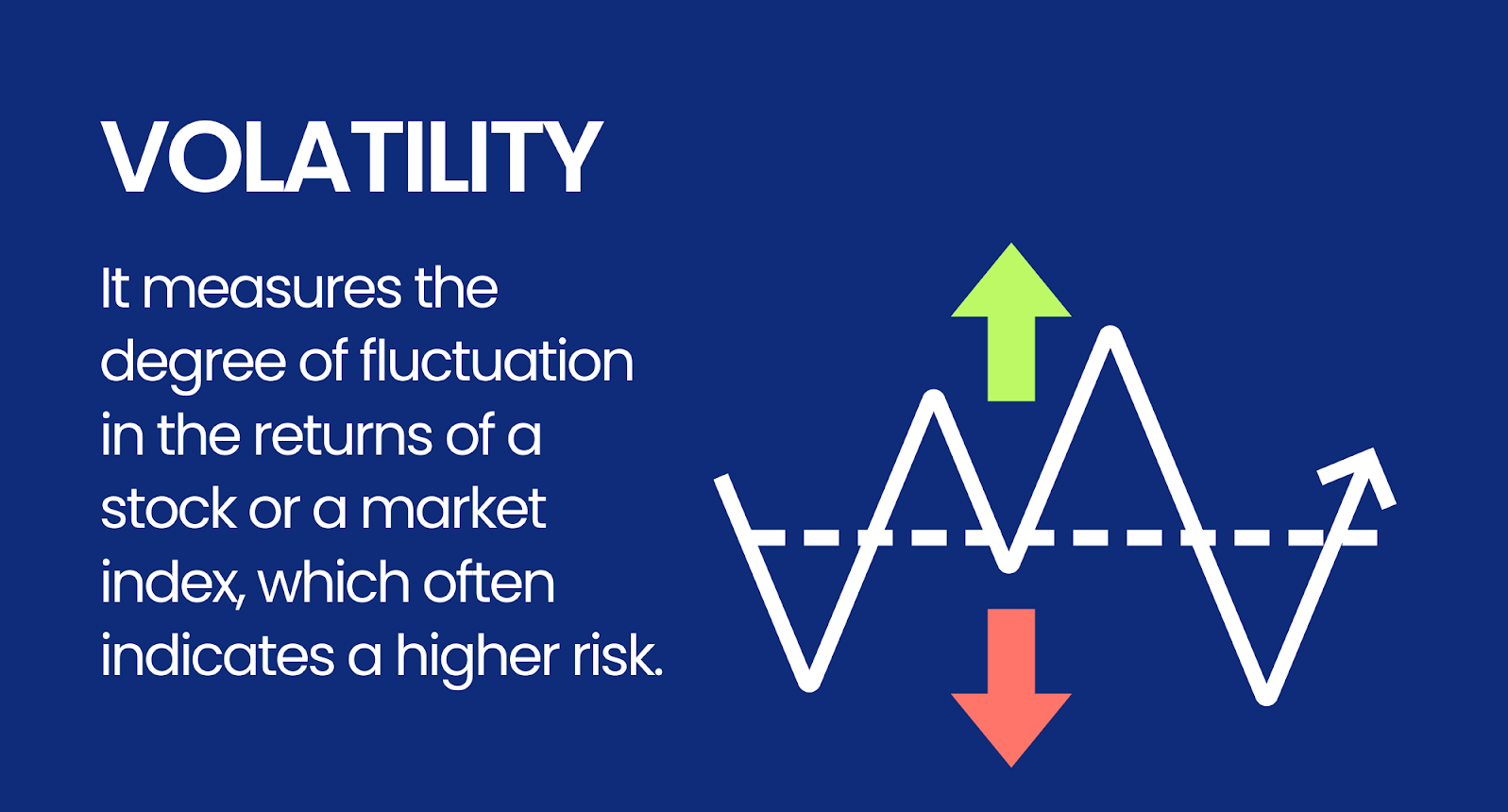
Realized Volatility (Historical Volatility — HV)
- What it is: The actual, measurable fluctuation of an asset’s price over a specific past period (e.g., the last 30 days). It is calculated based on historical price data.
- What it tells you: How much the price actually moved in the past. It is backward-looking.
- How it’s used: Used to calculate risk-management metrics like Average True Range (ATR) and to set statistical stop-loss levels.
Implied Volatility (IV)
- What it is: The market’s expectation of how volatile the asset will be in the future. It is derived from the current prices of options contracts on that asset.
- What it tells you: The level of risk the market anticipates. It is forward-looking.
- How it’s used: The core indicator for option traders. High IV suggests the market expects a major move (e.g., before an earnings report); low IV suggests complacency.
Key Relationship: Successful volatility trading often involves exploiting the divergence between these two measures. For example, buying options when IV is historically low, betting that realized volatility will increase and bring the price (and IV) higher.
Measuring the Uncertainty: Tools of the Trade
Advanced traders rely on specific indicators to quantify and compare market uncertainty.
Average True Range (ATR)
- Purpose: The simplest tool for realized volatility. ATR shows the average range between the high and low price (including overnight gaps) over a specified number of periods (e.g., 14 days).
- Application: Used for position sizing and stop-loss placement. If the ATR on a stock is $2.00, placing a stop-loss at $0.50 is likely to get hit randomly, while placing it at $3.00 may be too conservative.
VIX: The Fear Index
- Purpose: The CBOE Volatility Index (VIX) is the benchmark measure of the stock market’s implied volatility, derived from S&P 500 (SPX) option prices.
- Application: VIX is often called the «Fear Index» because its values are inversely correlated with the stock market.
- High VIX (above 30-40): Suggests investor fear and panic (opportunity for contrarian buying).
- Low VIX (below 15): Suggests investor complacency and low risk-perception (potential signal for a forthcoming correction).
Historical Volatility (HV)
- Purpose: A more sophisticated statistical calculation of an asset’s realized volatility, often measured as the standard deviation of its returns.
- Application: Used to statistically define «normal» price movement. If a price move exceeds two standard deviations of the HV, it is considered statistically significant and often triggers algorithmic trading action.
Advanced Volatility Trading Strategies
Volatility traders often use options because their value is directly tied to implied volatility. These strategies allow you to profit whether the market moves up, down, or simply remains flat.
The Straddle: Betting on a Big Move (Directionless)
- Setup: Simultaneously buy a Call option and a Put option with the same strike price and expiration date.
- Goal: To profit from a large move in either direction. The market must move far enough (up or down) to cover the cost of both premiums paid.
- When to Use: Before high-impact, binary events where the market direction is unknown, but a huge price change is expected (e.g., a major FDA ruling, Federal Reserve interest rate decision).
The Strangle: The Cheaper Big Move Bet
- Setup: Simultaneously buy an out-of-the-money (OTM) Call option and an OTM Put option with the same expiration date.
- Goal: Similar to the Straddle, but cheaper because OTM options are less expensive. Requires an even larger move to turn a profit.
- When to Use: When you believe the market is mispricing the potential for a massive, surprise move.
Calendar Spreads (Time Decay vs. Volatility)
- Setup: Simultaneously buy a longer-term option (e.g., 3 months out) and sell a shorter-term option (e.g., 1 month out) on the same asset.
- Goal: To profit from the difference in time decay (Theta). The short-term option loses value faster.
- When to Use: During periods of high IV, expecting it to drop (selling expensive near-term options) or when expecting the stock to remain relatively stable in the short term before making a move.
Risk Management in Volatile Conditions
Volatility is not an enemy, but it significantly changes how risk must be managed.
Position Sizing by Volatility
Do not use a fixed dollar amount for position sizing. Adjust position size inversely to volatility.
- High Volatility: Reduce the number of contracts or shares you buy. This ensures that the wider swing (higher ATR) does not trigger a disproportionately large capital loss.
- Low Volatility: You can cautiously increase position size, as price swings are tighter, allowing for smaller absolute stops.
Avoiding Volatility Spikes (VIX & News)
Be tactical about when you enter trades. Entering a trend position just before a major news event or when VIX is at extreme highs is often entering at peak risk.
The Strategy: Use high volatility events to establish positions after the spike has occurred. For example, wait for the post-announcement price range to establish itself, then trade the breakout or breakdown of that range, confirming the market’s new direction.
Understanding the Volatility Smile
In options trading, IV is rarely uniform across all strike prices. It typically forms a «smile» or «smirk,» where OTM and ITM options have higher IV than at-the-money (ATM) options. Ignoring this structure means mispricing the options you trade and taking on hidden risk.
Conclusion
Volatility is the lifeblood of the market, and learning to treat it as a measurable asset is the hallmark of an advanced trader. By accurately distinguishing between realized and implied volatility, using tools like ATR and VIX, and strategically deploying options strategies like Straddles and Strangles, you can turn market uncertainty from a source of fear into a predictable source of profit and risk control. Mastering volatility allows you to profit not just from where the market goes, but from how fast it gets there.

