


Mastering the Range Trading Strategy for Market Stability
23 December 2025
176 views
Mastering the Range Trading Strategy for Market Stability
Financial markets do not always trend in a clear upward or downward direction. In many phases, price fluctuates within a well-defined zone, moving sideways between established support and resistance levels. Range trading is a strategy designed specifically for these conditions, allowing traders to extract opportunities from stable, non-trending markets.
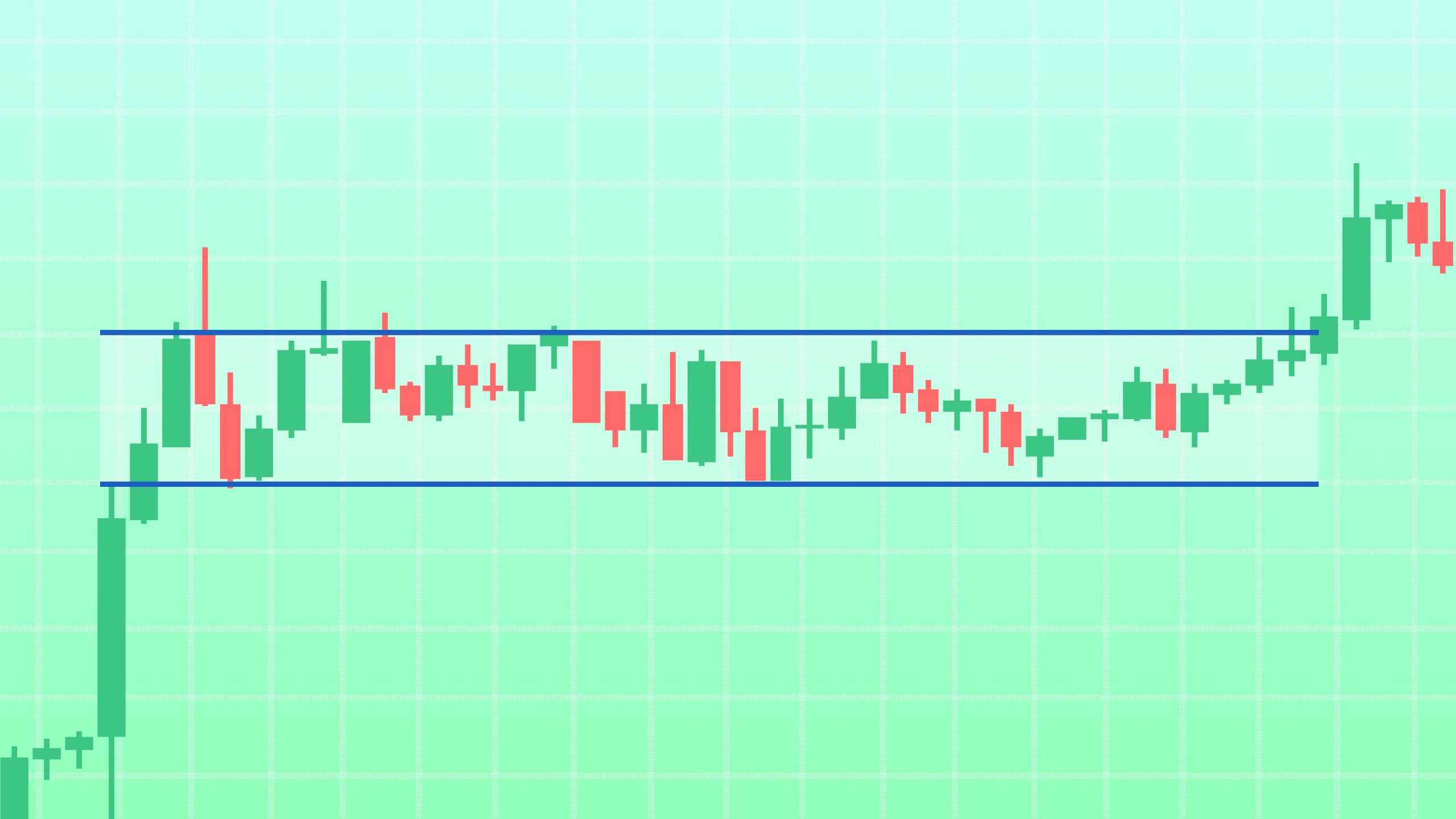
Rather than chasing momentum or breakouts, range traders focus on repetition and structure. They assume that price will continue to respect historical boundaries until clear evidence of a breakout appears. This makes range trading particularly attractive during periods of consolidation, low macro uncertainty, or balanced supply and demand.
Understanding Range Trading
A trading range forms when an asset repeatedly oscillates between two horizontal levels, creating a price channel. The lower boundary represents support, where buying interest tends to emerge, while the upper boundary represents resistance, where selling pressure often increases. As long as price remains confined within these levels, the market is considered range-bound.
Range trading is commonly used by day traders and swing traders, as it operates effectively across short to medium timeframes. Traders may open long positions near support with the expectation of a rebound toward resistance, or initiate short positions near resistance anticipating a pullback toward support. Because both long and short opportunities exist, range trading can remain productive even when broader market direction is unclear.
Identifying High-Quality Trading Ranges
Successful range trading begins with identifying a well-defined and reliable price range. Support and resistance levels become more meaningful when price has tested them multiple times without breaking through. Each additional test strengthens the credibility of the range and increases the probability that price will continue to respect its boundaries.
Entry and exit planning revolves around these levels. Long trades are typically initiated close to support, while exits are placed near resistance. Short trades follow the opposite logic. Because support and resistance are zones rather than exact prices, traders often refine entries using nearby price structure or confirmation signals to improve execution.
Many range traders use limit orders to automate entries at predefined levels. This reduces emotional decision-making and allows trades to be executed precisely when price reaches the intended area, without the need for constant monitoring.
Technical Analysis in Range Trading
Technical analysis is the foundation of range trading, as the strategy relies entirely on historical price behaviour. The most basic approach uses horizontal support and resistance lines to define the range. This method is especially accessible for beginners, as it requires minimal indicators and emphasises price action.
More advanced traders may incorporate momentum oscillators such as the Relative Strength Index or the Stochastic Oscillator. These indicators help identify overbought and oversold conditions within the range, improving timing and filtering low-probability trades. When price approaches resistance while momentum indicators signal overbought conditions, the probability of a reversal increases. Similarly, oversold readings near support may strengthen the case for long entries.
Risk management remains a critical component. Since range trading assumes price containment, stop-loss orders are typically placed just beyond support or resistance levels. This protects capital if a breakout occurs and invalidates the range structure.
Managing Breakout Risk
No trading range lasts indefinitely. Eventually, price will break above resistance or below support, often driven by shifts in market sentiment, economic data, or institutional activity. For range traders, breakouts represent the primary source of risk.
Active trade monitoring and predefined exit rules are essential. Stop-loss orders help limit losses during sudden price expansion, while some traders choose to close positions manually when breakout momentum becomes evident. Others adapt by transitioning into breakout or trend-following strategies, allowing them to stay aligned with the new market phase.
Advantages and Limitations of Range Trading
One of the greatest strengths of range trading is its ability to generate opportunities in markets that lack clear directional bias. Because all assets experience periods of consolidation, range trading can be applied across stocks, forex, commodities, indices, and ETFs.
The strategy is suitable for both beginners and experienced traders due to its clear structure and logical framework. However, profit potential is inherently limited by the size of the range. Large directional moves typically occur outside range-bound conditions, making trend-based strategies more effective in highly volatile environments.
Getting Started with Range Trading
To begin range trading, traders need access to a trading platform that provides reliable price charts and technical tools. Support and resistance levels can be drawn by connecting repeated highs and lows over the selected timeframe. Momentum indicators can be added to refine entries and exits.
Before committing capital, testing the strategy in a demo environment is highly recommended. Practising with virtual funds allows traders to develop confidence, improve execution, and understand how ranges behave across different market conditions. With experience and disciplined risk control, range trading can become a valuable component of a well-rounded trading approach.

