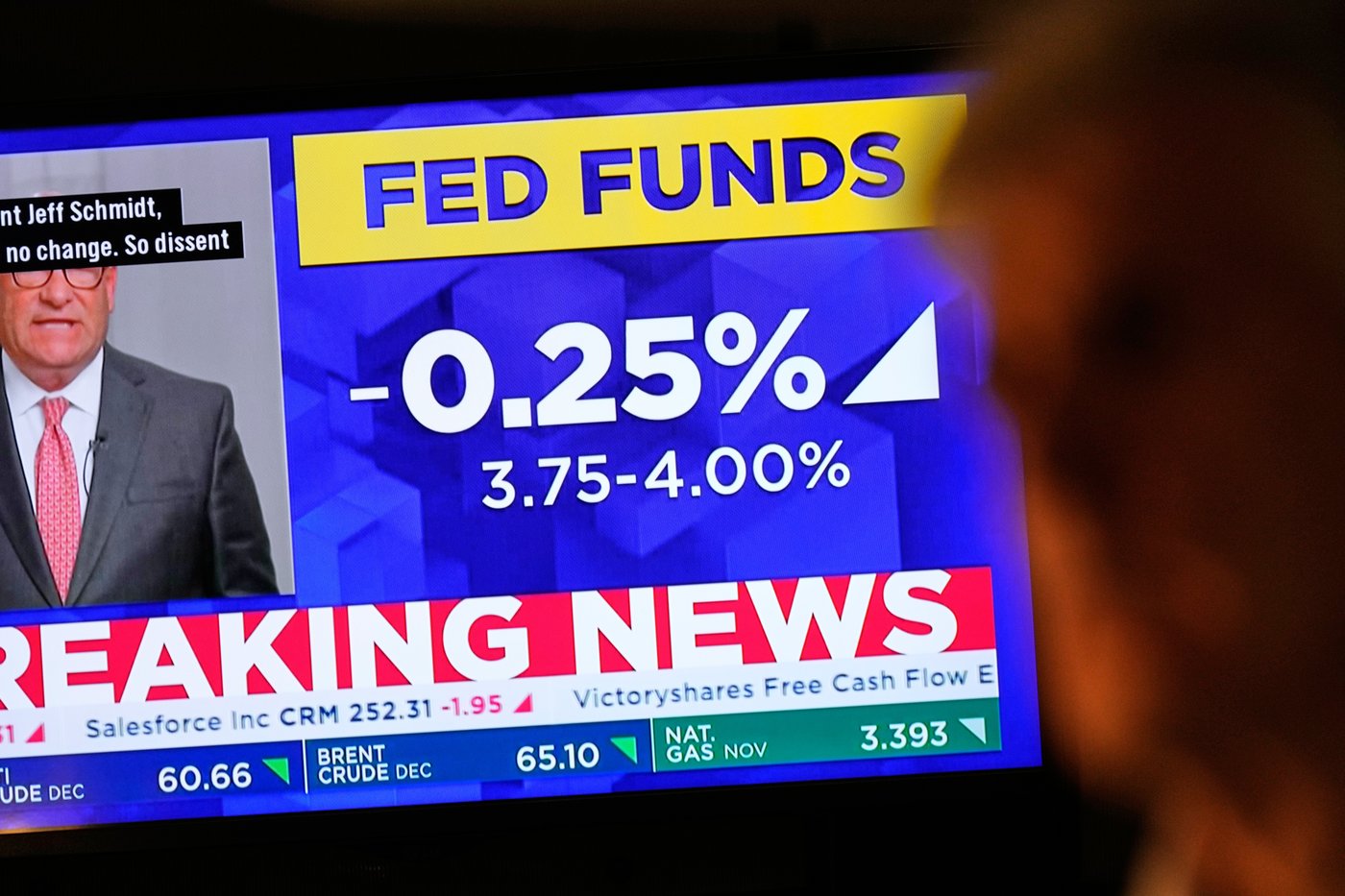
Wall Street opened December with a strong rebound as weaker-than-expected U.S. private-sector jobs data boosted expectations that the Federal Reserve may be forced to accelerate policy easing in early 2026.
The latest private payrolls report showed a notable slowdown in hiring, reinforcing the narrative that the U.S. labor market is losing momentum. For investors, the data point was soft enough to strengthen the case for rate cuts—but not weak enough to trigger recession panic.
Equity markets responded immediately. Tech and high-growth sectors outperformed, supported by lower Treasury yields and expectations of cheaper borrowing conditions ahead. The S&P 500 and Nasdaq 100 both erased last week’s losses, while defensive sectors lagged as investors rotated back into risk.
Bond markets also rallied, with yields falling across the curve as traders priced in a higher probability of a March or even January rate cut. Interest-rate futures implied a steeper easing path compared to the previous week.
In currencies, the dollar slipped against most majors, particularly the euro and yen, as yield differentials narrowed. Commodity currencies saw mixed performance—stronger risk sentiment helped the Australian dollar, while oil fluctuations kept the Canadian dollar range-bound.
Gold remained firm near recent highs, supported by lower yields and ongoing uncertainty surrounding the U.S. government shutdown, which continues to delay key economic releases and complicate the Fed’s data-dependent framework.
With labor-market softness resurfacing and inflation indicators stabilizing, markets now see a clearer runway for the Fed to begin cutting rates—though the pace and scale remain dependent on December’s major economic prints.