



Copy Trading Risk Models That Protect Your Capital Like a Pro
12 November 2025
196 views
Copy Trading Risk Models That Protect Your Capital Like a Pro
Many beginners enter copy trading with one assumption: “If the trader is profitable, I will be too.” In reality, the biggest losses in copy trading do not come from market volatility — they come from the absence of a risk model.
Copy Trading is not “copying success.” It is the systematic allocation of risk across traders, strategies, asset classes, and market regimes.
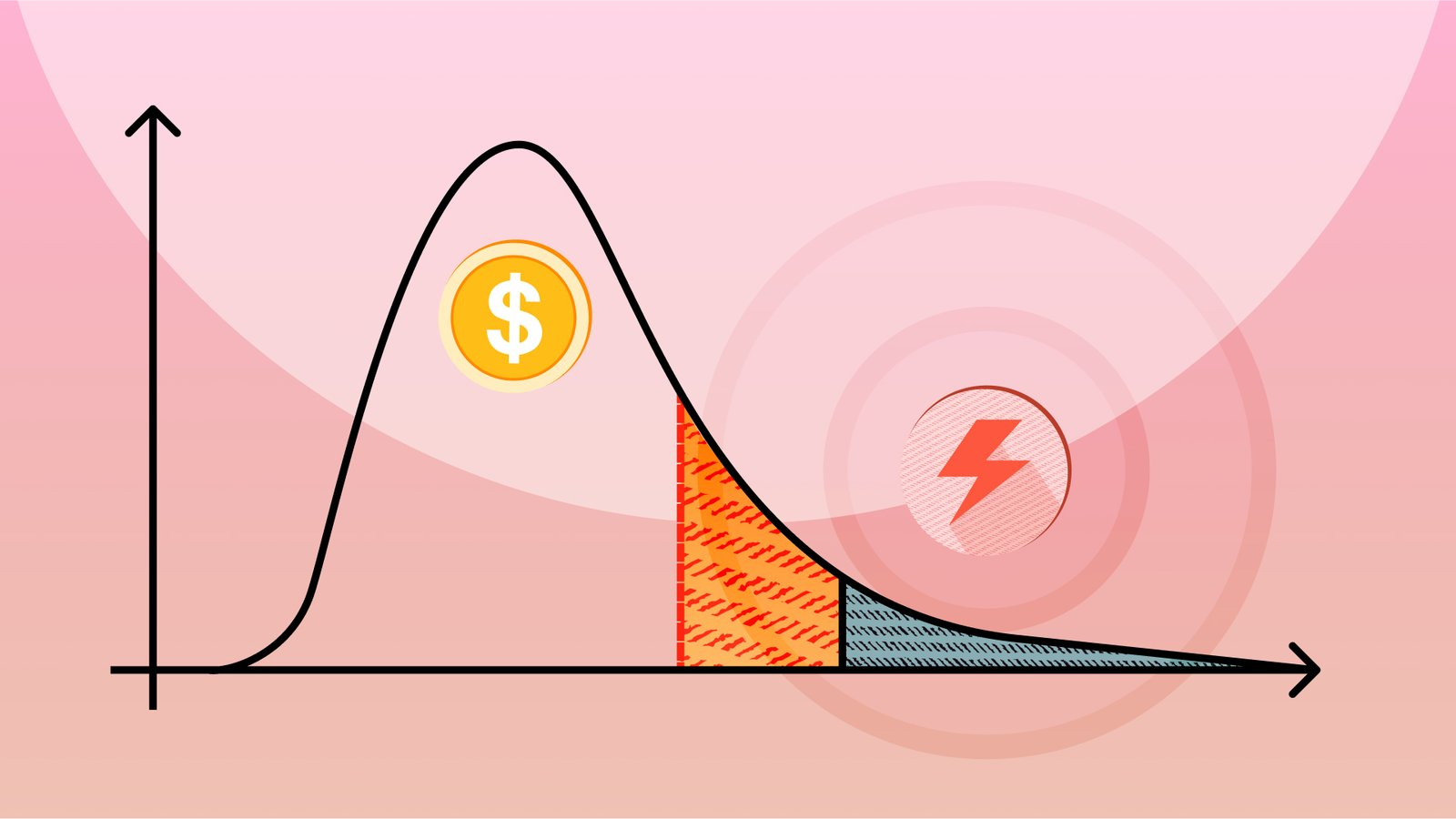
Without a structured framework, even the best trader can become a liability because:
- every strategy has inevitable drawdowns,
- past performance may not match your risk tolerance,
- emotions trigger premature exits and overexposure,
- poor allocation makes the entire account dependent on one person.
Professional investors understand a simple truth: returns are the outcome of risk management — not the cause.
This guide teaches you how to build a risk-driven copy trading portfolio that protects capital, minimizes volatility, and improves long-term consistency.
The Foundations of Risk-Based Copy Trading
A risk-based approach begins with one question:
“What is the worst-case scenario, and how do I position my portfolio so it survives it?”
In copy trading, this is especially critical because you rely on external strategies you cannot directly control.
What “Risk-Based” Really Means
Risk-based copy trading means:
- assigning capital based on risk, not emotions or recent performance,
- analyzing stability rather than focusing on flashy returns,
- treating each trader as a risk unit, not a profit engine,
- building a portfolio designed to absorb shocks, not chase hype.
The goal is simple: No single strategy should ever be able to destroy your portfolio.
When risk is evenly distributed and controlled, returns become naturally more stable.
Key Risk Metrics Every Copy Trader Must Use
Before you copy a trader, the question is not “How much did they make?”
It is “How much did they risk to make it?”
Here are the professional metrics that determine whether a strategy is stable or dangerous.
Maximum Drawdown (MDD)
The most critical metric.
MDD shows the deepest drop from the portfolio’s peak to its lowest point.
Why it matters:
- large drawdowns create catastrophic losses when scaled through copy trading,
- psychological stress increases the chance of quitting at the worst moment,
- high-MDD traders tend to blow up during regime shifts.
Rule of thumb:
Only copy traders whose worst drawdown you can financially and emotionally tolerate.
Volatility (σ)
Measures how stable or unstable a strategy is.
High volatility = large, unpredictable swings.
Low volatility = smoother, more consistent growth.
For copy trading, lower volatility is usually superior, because:
- automated scaling amplifies volatility,
- large fluctuations can trigger margin risk,
- emotional stress increases the likelihood of premature exit.
Sharpe Ratio
Shows how much return the strategy generates per unit of risk.
- >1.0 — acceptable
- >1.5 — strong
- >2.0 — professional
- <1.0 — unstable or overly risky
Sharpe Ratio is one of the best filters against “lucky streaks” and reckless strategies.
Profit Factor (PF)
PF = total gross profit ÷ total gross loss.
- 1.2–1.5 — average but workable
- 1.6–2.0 — reliable
- >2.0 — high-quality system
High PF with low volatility reveals disciplined, well-structured strategies.
Ulcer Index
A professional-grade metric measuring:
- depth of drawdowns,
- duration of drawdowns,
- frequency of drawdowns.
Two traders may have the same total return — but the one with a lower Ulcer Index is dramatically safer to copy.
Allocating Capital Using Professional Risk Models
Strong analysis means nothing if allocation is random. Here are the allocation frameworks used by advanced investors for copy trading.
Fixed Fractional Allocation
You allocate a fixed percentage of capital to each trader or strategy. This prevents catastrophic overexposure but does not adapt to volatility.
Volatility-Adjusted Allocation
Also called Volatility Targeting or VAA.
You allocate based on volatility:
- lower-volatility strategies receive more capital,
- higher-volatility strategies receive less.
Drawdown-Based Allocation
You size positions according to each trader’s historical maximum drawdown.
Example: If a trader historically experienced 20% drawdowns, they receive half the allocation of a trader with a 10% drawdown.
This method protects against strategies that look profitable but carry hidden blow-up risk.
Risk-Parity Allocation
A professional institutional model where each trader contributes equal risk to the portfolio.
Risk parity ensures:
- no strategy dominates overall portfolio risk,
- losses are smoother and more predictable,
- diversification is mathematically optimized rather than emotional.
This is one of the best models for long-term copy trading.
Building a Complete Risk Framework for Copy Trading
A truly professional risk model includes:
Filters Before Copying
Check:
- maximum drawdown,
- volatility,
- Sharpe Ratio,
- stability of equity curve,
- track record length,
- behavior during high-volatility periods.
Never copy traders with insufficient history or dramatic swings.
Allocation Rules
Define your capital distribution clearly, such as:
- no single trader receives more than 10–20%,
- high-volatility traders capped at lower allocation,
- low-correlation strategies receive larger weighting.
Correlation Analysis
If two strategies move the same way, they do not diversify your risk.
Use only non-correlated or negatively correlated traders to strengthen the portfolio.
Periodic Rebalancing
Every month or quarter:
- reduce allocation to underperforming or high-volatility traders,
- increase allocation to stable, low-drawdown performers,
- maintain target risk exposure.
Rebalancing reduces risk drift and smooths long-term equity growth.
Real-World Portfolio Example
Here is a simplified portfolio structure using risk-parity and volatility-adjusted allocation:
- Trend-following trader (low volatility): 25%
- Intraday scalper (medium volatility): 20%
- Mean-reversion algorithm (low drawdown): 20%
- Crypto momentum trader (high volatility): 10%
- Gold hedging strategy (negative correlation): 15%
- AI-driven macro strategy: 10%
Result:
- stable returns,
- contained drawdowns,
- protection across market regimes.
Conclusion
The traders you copy are not the foundation of your portfolio. Your risk model is.
Copy trading becomes predictable, controlled, and scalable only when:
- risk is allocated intentionally,
- volatility is managed professionally,
- diversification is structural,
- decisions are systematic, not emotional.
You cannot control markets.
You cannot control the traders you follow.
But you can control your risk model, and that is what separates professionals from beginners.
A well-designed risk framework does not just protect your capital — it multiplies it consistently over time.

