
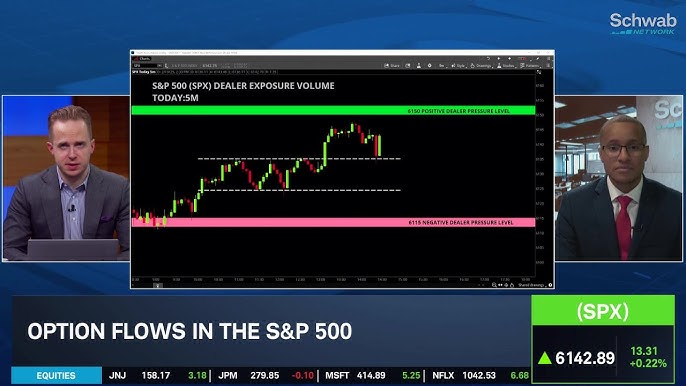
A surge in upside call-option buying has left options dealers in a pronounced “short gamma” position, raising the potential for exaggerated swings both upward and downward as the S&P 500 approaches the 7,000 level.
Key Dynamics
The S&P 500’s year-to-date rally of ~17% has coincided with the highest one-month calls-to-puts ratio in about four years.
Options dealers, typically hedging to remain neutral, are now forced into reactive hedging: buying stock futures into rallies, selling them into drops — the hallmark of a short gamma state.
This hedging behavior amplifies market moves: if prices rise, dealer hedging can fuel additional buying; if prices fall, dealer hedging can accelerate the decline.
Implications for Traders
Upside Breakout Potential: If the S&P 500 breeches 7,000, dealer-hedge buying could accelerate the move, transforming what would be a normal rally into a sharp one.
Downside Risk: Conversely, market weakness now could be amplified — the same structures that fuel sharp rises can also deepen falls. Analysts estimate a potential 3–5% pull-back window unless fresh momentum emerges.
Tech Concentration Alert: A lot of the activity is centred on the “Magnificent Seven” tech giants, making the index more vulnerable if one or more falter.
What to Monitor
Open interest and hedge-activity data in major index options (especially calls around 7,000).
Shifts in dealer gamma exposure (tools such as GEX can illustrate this).
Earnings updates in high-gamma stocks (Apple, Microsoft, Nvidia) and how their moves affect index derivatives.
Macro/monetary surprises — with dealers hedged to magnify moves, a twist in Fed policy or inflation data could trigger outsized swings.
Bottom Line
The market is not necessarily being driven purely by fundamentals right now — positioning matters. The dominant options-flow structure means the S&P 500’s next move (up or down) could be steeper than usual. Traders should prepare for higher amplitude in index moves, and may consider hedging or adjusting risk exposure accordingly.