
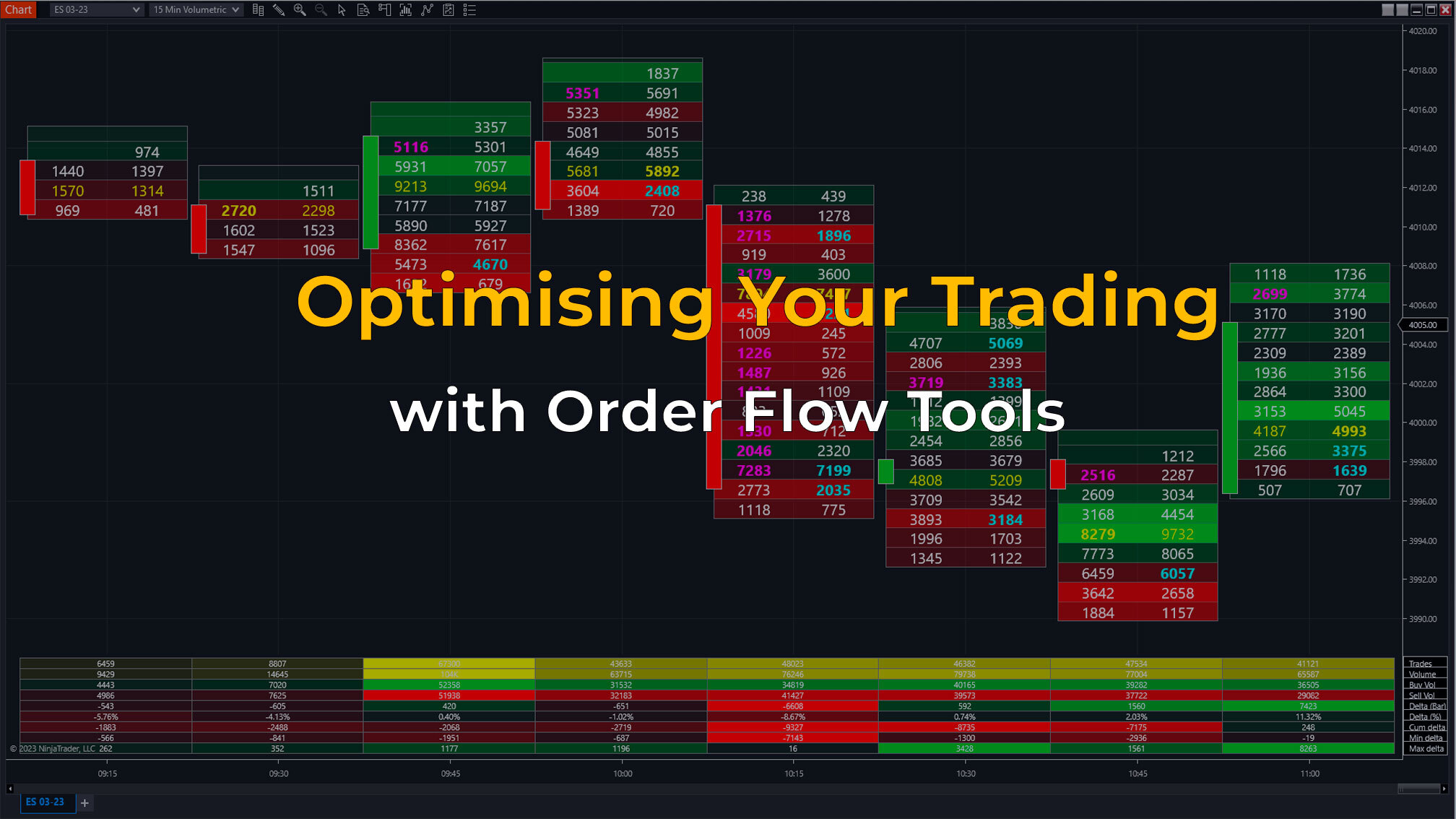


Optimising Your Trading with Order Flow Tools
29 ноября 2025
235 views
Optimising Your Trading with Order Flow Tools
Order flow analysis has become a cornerstone of modern trading, especially for traders seeking deeper insight into market structure, liquidity, and the intentions of institutional participants. While price charts show what has happened, order flow reveals why it happened by exposing the constant interaction between buyers and sellers at each price level. Understanding this dynamic allows traders to refine execution, strengthen risk management, and gain a more nuanced view of market behaviour that traditional indicators cannot provide.

At its core, order flow analysis examines executed orders and real-time liquidity changes. Tools such as Volume Profile, Time & Sales, Market Depth (Level 2), and Volume Delta help traders visualise where activity is concentrated, who is in control of the market, and how aggressively participants are entering positions. For CFD traders, this insight is especially valuable, as much of the short-term price movement is driven by institutional flows and liquidity imbalances.
Below is a structured guide to the key order flow tools and how each can enhance your trading approach.
Introduction to Order Flow Tools
Order flow tools provide real-time visibility into market transactions, offering traders direct insight into buying and selling pressure, liquidity shifts, and order execution. Rather than relying solely on lagging indicators, traders can observe how orders are being placed and absorbed at critical levels. This allows them to identify meaningful support and resistance, validate breakouts, assess trend strength, and refine entry and exit decisions.
Incorporating order flow into CFD trading is especially important, as institutional positioning greatly influences intraday volatility and directional bias. Effective use of these tools helps traders avoid false signals, better time their trades, and understand the deeper context behind price movements.
Different Types of Order Flow Tools

Volume Profile
Volume Profile displays how much volume traded at each price level over a chosen period. Instead of showing volume per candle, it maps trading activity horizontally, highlighting where the market has spent the most time and volume. These zones often represent areas of strong interest from institutional traders.
Volume Profile helps identify high-volume nodes that act as support and resistance, define value areas where the market perceives fair pricing, and confirm whether a breakout is supported by genuine participation. Traders use these zones to locate strategic entry points, manage risk, and anticipate potential reversals.
Time & Sales (T&S)
Time & Sales offers a granular record of every executed trade, including price, size, and timestamp. This feed allows traders to see how quickly orders are being filled, whether transactions favour the bid or ask, and whether large transactions influence short-term direction.
By analysing T&S, traders can verify market direction, identify bursts of activity that signal incoming volatility, and detect institutional footprints through unusually large trades. These insights improve trade selection and help confirm whether momentum is authentic or fading.
Market Depth (Level 2)
Market Depth, or Level 2 data, shows the full order book — all visible buy and sell orders beyond the best bid and ask. This tool reveals real-time liquidity, order clustering, and the balance between supply and demand before trades are executed.
Traders use Market Depth to locate potential support and resistance levels, observe how the market absorbs large orders, and interpret directional bias through order book imbalances. A buildup of large buy or sell orders often signals where the market may react or pause.
Volume Delta
Volume Delta measures the difference between executed volume at the bid and executed volume at the ask. This helps traders assess who is in control: buyers lifting the ask or sellers hitting the bid.
A consistently positive delta indicates strong buying pressure, while negative delta shows aggressive selling. Delta also highlights divergences between price and order pressure — an early warning of trend weakness or reversal.
How Order Flow Tools Can Improve Trade Execution

Using Volume Profile
Volume Profile allows traders to detect important support and resistance by observing where volume is concentrated. High-volume zones often act as market magnets or barriers. Traders can use value areas to determine fair pricing and identify zones where reversals or continuations are likely. When price breaks through a level accompanied by strong volume, the breakout has a higher probability of sustaining, making Volume Profile a powerful confirmation tool.
Using Time & Sales
The speed and size of transactions in T&S help traders judge market activity and momentum. Spikes in executed trades often precede strong directional moves. When the tape shows persistent buying or selling, it strengthens the case for entering trades in that direction. Large prints may reveal institutional positioning, providing traders with valuable clues about impending volatility.
Using Market Depth
By analysing the order book, traders can identify where liquidity is stacked and how the market reacts to incoming orders. If large buy orders continually absorb selling pressure, it suggests accumulation. Conversely, heavy sell-side liquidity may signal forthcoming declines. Market Depth also helps refine stop placement and execution timing by revealing hidden supply and demand.
Using Volume Delta
Delta enables traders to quantify order aggression. Tracking delta during key price movements can confirm whether a trend is supported by real conviction. Divergences between price and delta often signal exhaustion; for example, price may rise while delta weakens, suggesting buyers are losing control. Sustained delta strength reinforces trend confidence, helping traders hold positions longer.
Summary
Order flow tools offer traders a more advanced and realistic view of how markets operate beneath the surface. Whether you’re analysing order absorption, confirming breakout strength, or assessing execution timing, these tools provide the contextual intelligence needed to make more precise decisions. For CFD traders navigating markets influenced heavily by institutional flows, understanding order flow is not just an advantage — it is essential.

