



Hedging and Arbitrage Strategies in Global Markets
18 июня 2025
254 views
Hedging and Arbitrage Strategies in Global Markets
Level: Advanced / Pro
Core Concept: In the unpredictable world of global finance, two pillars stand out for sophisticated traders and institutions: hedging, which focuses on risk reduction and capital preservation, and arbitrage, which seeks to capture «risk-free» profits from market inefficiencies. This article delves into the mechanisms behind these advanced strategies, exploring their application across currencies, commodities, and equities. The goal is to equip traders with professional-grade tools to both protect their capital and enhance portfolio efficiency through calculated, systematic approaches.
Principles of Hedging: Protecting Your Capital
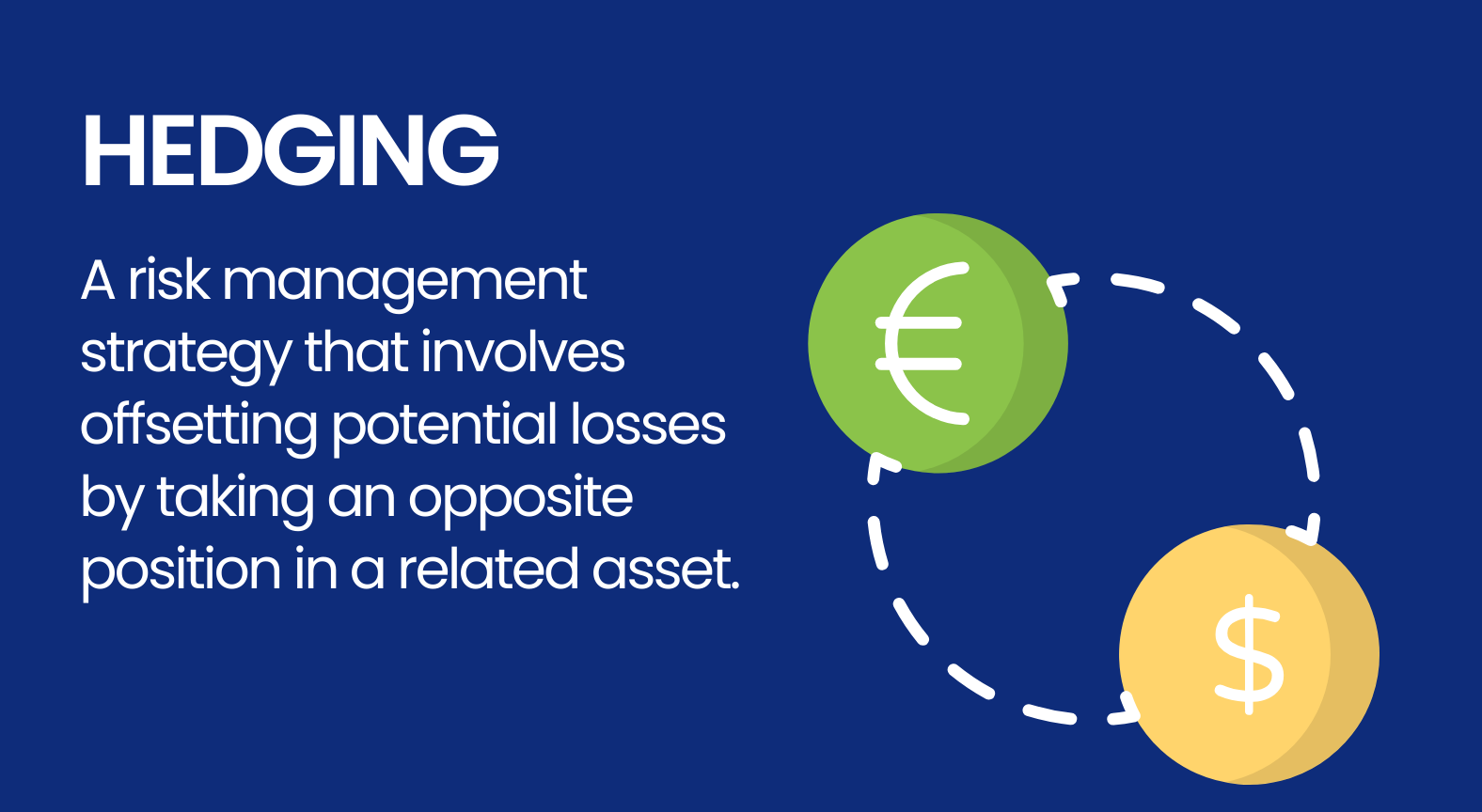
Hedging is the practice of taking an offsetting position to protect against potential losses in an existing investment. It’s about reducing exposure to specific risks, not maximizing profits.
Currency Hedging
- Purpose: To protect against adverse movements in exchange rates when you have assets or liabilities denominated in a foreign currency.
- Example: A European investor buys US stocks. If the USD weakens against the EUR, the value of their US stock investment, when converted back to EUR, will decrease even if the stock price itself rises.
- Mechanism: To hedge, the investor would sell USD futures or buy EUR futures (or use forward contracts) for the expected amount of their US investment at a future date. This locks in an exchange rate, mitigating currency risk.
- Key Insight: Currency hedging is essential for international investors, as currency fluctuations can often outweigh asset price movements.
Commodity Hedging
- Purpose: To protect producers or consumers of commodities from adverse price fluctuations.
- Example (Producer): An oil producer anticipates selling oil in 6 months. If oil prices fall, their revenue decreases. To hedge, they would sell oil futures contracts today for delivery in 6 months. If prices fall, their loss on the physical oil is offset by a gain on the futures contract.
- Example (Consumer): An airline needs to buy jet fuel (derived from crude oil) in the future. If oil prices rise, their costs increase. To hedge, they would buy oil futures contracts today. If prices rise, the gain on futures offsets the increased cost of fuel.
- Mechanism: Typically involves using futures contracts to lock in a future price for the commodity.
Intermarket Hedging
- Purpose: To hedge risks across different, but correlated, asset classes.
- Example (Equity Portfolio Hedging): During periods of high market uncertainty, an investor holding a diversified stock portfolio might hedge against a broad market downturn by buying S&P 500 (SPX) Put options or selling E-mini S&P 500 futures. This allows them to maintain their long equity positions while mitigating systemic risk.
- Example (Inflation Hedge): If an investor is worried about inflation eroding bond values, they might take a long position in commodities (e.g., gold or a broad commodity ETF) as a hedge against their bond portfolio.
- Key Insight: Requires a deep understanding of correlations and how different markets move in relation to each other under various economic regimes.
Unlocking «Risk-Free» Profits
Arbitrage is the simultaneous purchase and sale of an asset in different markets to profit from a temporary difference in its price. True arbitrage is theoretically risk-free, though execution risk is always present.
Statistical Arbitrage (Stat Arb)
- Purpose: To profit from temporary, statistically derived pricing discrepancies between highly correlated assets. Not strictly «risk-free» but high probability.
- Example: If two stocks (e.g., Coca-Cola and Pepsi) usually move very closely together, but one briefly outperforms the other by a statistically significant amount, a stat arb strategy might short the outperformer and long the underperformer, betting they will revert to their historical correlation.
- Mechanism: Heavily reliant on quantitative models and high-frequency trading (HFT) to identify and execute these small, fleeting divergences.
- Key Insight: This is a high-volume, low-margin strategy, requiring sophisticated infrastructure.
Intermarket Arbitrage
- Purpose: To profit from price discrepancies of the same or highly correlated assets traded in different, but linked, markets.
- Example (Treasury Futures vs. Spot Bonds): A bond trader might see a discrepancy between the price of a US Treasury bond future and the underlying physical Treasury bond. They would simultaneously buy the cheaper asset and sell the more expensive one, locking in a profit when the prices converge.
- Example (Crude Oil Futures Spread — Brent vs. WTI): The price difference between Brent (European benchmark) and WTI (US benchmark) crude oil futures often creates arbitrage opportunities based on shipping costs, refinery demand, and geopolitical factors. A trader might long Brent and short WTI (or vice versa) if the spread deviates from its historical mean.
Cross-Exchange Arbitrage
- Purpose: To profit from tiny price differences for the exact same asset listed on different exchanges.
- Example: A stock might be listed on both the New York Stock Exchange (NYSE) and the London Stock Exchange (LSE). If the price on the NYSE is momentarily lower than on the LSE (after accounting for exchange rates and fees), an arbitrageur would simultaneously buy on NYSE and sell on LSE.
- Mechanism: Requires extremely fast execution (HFT is dominant here) and direct access to multiple exchanges to capture these fleeting opportunities before they are closed by other arbitrageurs.
- Key Insight: These opportunities are often measured in milliseconds and require zero latency.
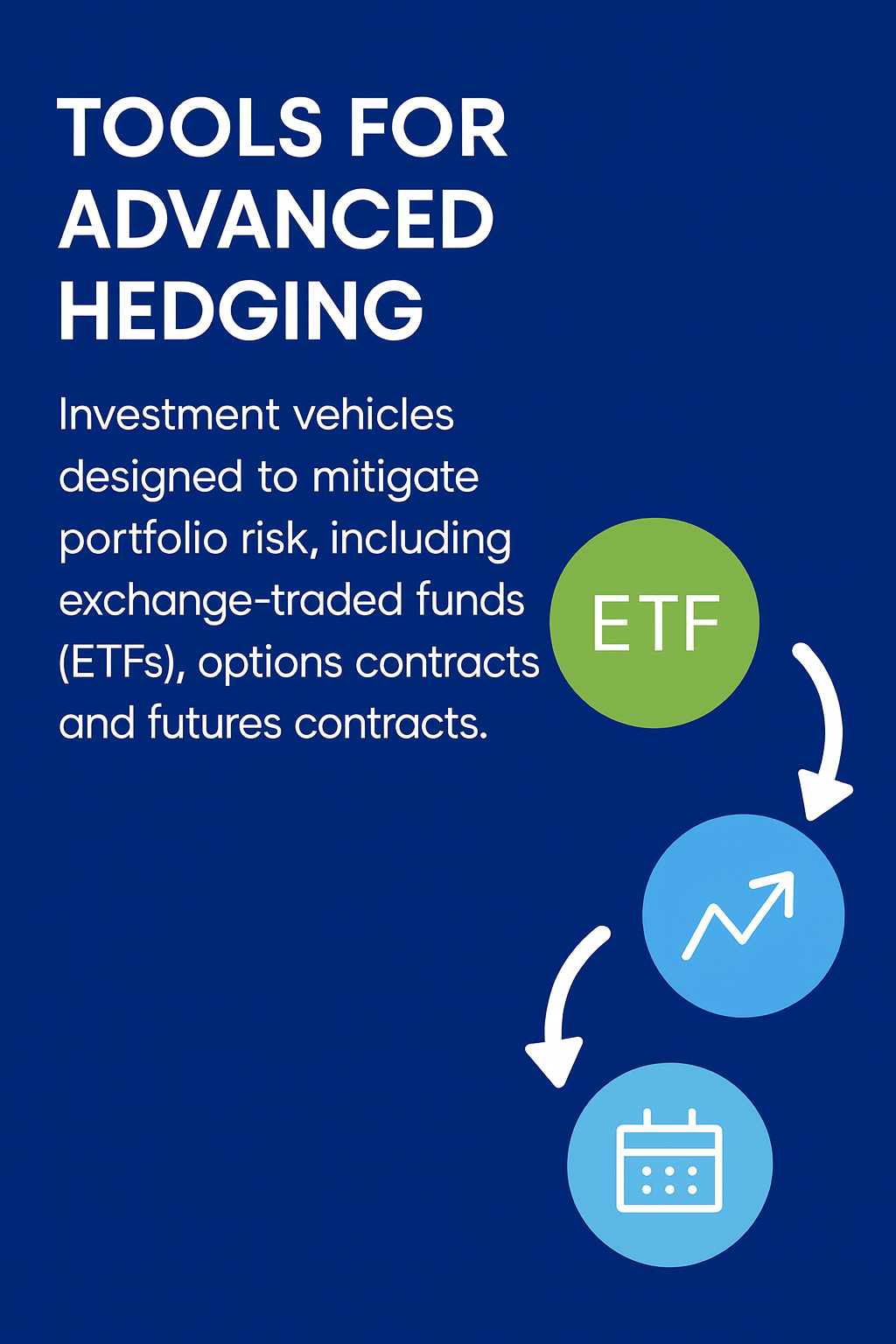
Tools for Advanced Hedging: ETFs, Options, and Futures
These financial instruments provide the flexibility and leverage needed for effective hedging.
ETFs (Exchange Traded Funds) for Portfolio Hedging
- Broad Market Hedging: Selling S&P 500 ETFs (e.g., SPY) or buying inverse ETFs (e.g., SH) can provide a broad hedge against a downturn in a diversified equity portfolio.
- Sector-Specific Hedging: Using sector-specific ETFs (e.g., XLE for Energy) to hedge exposure to a particular industry.
- Commodity Exposure: Investing in commodity ETFs (e.g., GLD for gold, USO for oil) can serve as a hedge against inflation or geopolitical risk.
Options for Dynamic Risk Management
Options offer highly versatile hedging capabilities due to their non-linear payoff structures.
- Portfolio Protection (Puts): Buying Put options on individual stocks or broad market indices (e.g., SPX Puts) provides a direct hedge against downside risk, acting like an insurance policy. The maximum loss is limited to the premium paid.
- Collar Strategy: Combining a long stock position with the simultaneous sale of an OTM Call option and purchase of an OTM Put option. This caps both upside gains and downside losses, effectively creating a defined risk/reward window.
- Synthetic Short: Combining a long Put and a short Call at the same strike/expiration can replicate the payoff of a short stock position, allowing for a leveraged hedge without directly shorting.
Futures for Precision Hedging
Futures contracts are highly liquid and standardized, making them ideal for precise hedging of commodities, currencies, and indices.
- Index Futures: Selling E-mini S&P 500 futures contracts provides a highly liquid and capital-efficient way to hedge against broad market equity risk.
- Currency Futures: Used by international businesses or investors to lock in exchange rates for future transactions.
- Interest Rate Futures: Hedging against changes in interest rates (e.g., by selling Treasury bond futures if rates are expected to rise).
Real-World Examples: Capturing Inefficiencies
Observing these strategies in action clarifies their practical application.
The Brent-WTI Crude Oil Spread Arbitrage
- Scenario: Brent (international benchmark) and WTI (US benchmark) crude oil prices normally trade at a relatively stable spread, reflecting transportation costs and regional demand. However, geopolitical events (e.g., Middle East tensions affecting Brent supply) or regional gluts (e.g., US shale boom affecting WTI) can cause the spread to widen or narrow abnormally.
- Arbitrage Opportunity: If Brent becomes significantly more expensive than WTI (beyond historical norms), traders might simultaneously buy WTI futures and sell Brent futures, expecting the spread to revert to its mean. Conversely, if WTI becomes disproportionately expensive, they would reverse the trade.
- Execution: Requires access to both markets and an understanding of the fundamental drivers of the spread.
Cross-Exchange Equity Arbitrage
- Scenario: A company like BP is listed on the London Stock Exchange (LSE) and as an ADR (American Depositary Receipt) on the New York Stock Exchange (NYSE). Due to tiny delays in information flow or temporary order imbalances, the price of BP on the LSE might momentarily diverge from its ADR equivalent on the NYSE (adjusted for the exchange rate).
- Arbitrage Opportunity: An HFT firm identifies this micro-discrepancy and simultaneously buys BP on the cheaper exchange and sells it on the more expensive one, profiting from the immediate convergence.
- Execution: Dominated by algorithms due to the speed required to capture these ephemeral price differences.
Conclusion
Hedging and arbitrage represent the pinnacle of risk management and opportunity exploitation in global financial markets. By understanding how to strategically use instruments like ETFs, options, and futures to mitigate specific risks (hedging) and how to identify and exploit fleeting market inefficiencies (arbitrage), traders can significantly enhance the resilience and profitability of their portfolios. These professional-level strategies move beyond simple directional bets, empowering you to navigate complexities with precision and capitalize on the nuanced dynamics of interconnected global capital flows.

