



Master the Breakout Strategy
27 December 2025
155 views
Master the Breakout Strategy
The breakout strategy is one of the most widely used approaches in technical trading, built around the idea that strong price movements often begin when an asset escapes a well-defined trading range. When price breaks decisively above resistance or below support, it can signal the start of a new trend accompanied by rising volatility and expanding participation. Breakout trading focuses on identifying these moments early and positioning accordingly.
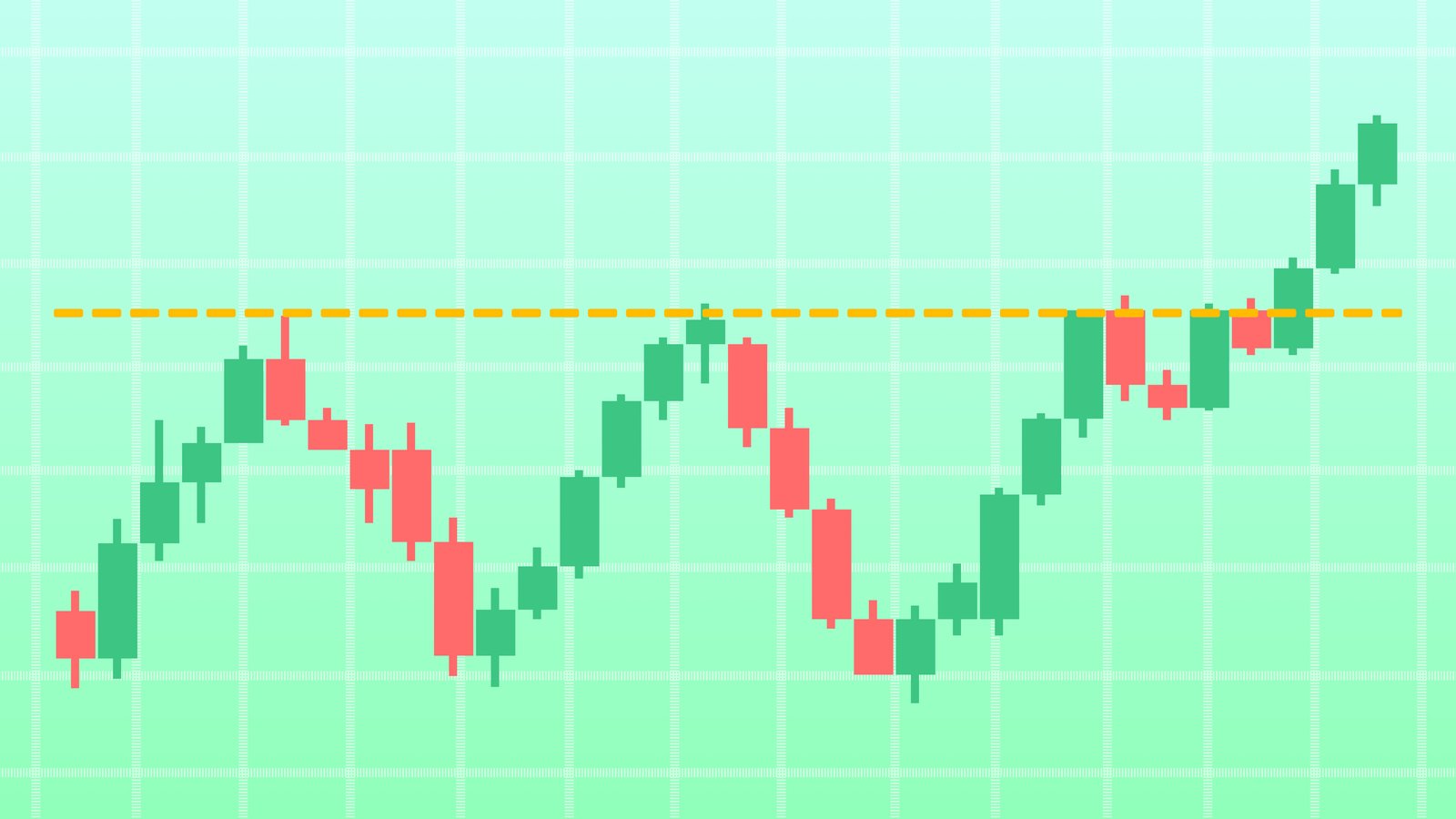
This strategy is applicable across all major asset classes, including equities, currencies, commodities, indices, and digital assets. Because breakouts are rooted in observable price behaviour rather than complex forecasting, the approach is accessible to beginners while still offering depth for more experienced traders.
Understanding Breakouts in Market Structure
A breakout occurs when price moves beyond established support or resistance levels that have previously contained market action. These levels represent areas where buying and selling pressure were relatively balanced. Once price escapes this zone, it suggests that one side of the market has gained control.
The core assumption behind breakout trading is momentum continuation. When resistance is broken, buyers are expected to push prices higher as new participants enter the market. When support fails, selling pressure often accelerates as stop orders are triggered and confidence deteriorates.
In markets that allow both long and short positioning, breakouts can be traded in either direction. An upside breakout typically leads to long exposure, while a downside breakout favors short positioning. In both cases, timing and confirmation are critical.
Identifying Trading Ranges and Key Levels
Successful breakout trading begins with correctly identifying the prevailing trading range. This requires analysing historical price behaviour to locate areas where price has repeatedly stalled or reversed. Support levels reflect zones of persistent demand, while resistance levels indicate areas where selling pressure has historically outweighed buying interest.
The reliability of these levels increases with repeated tests over time. Ranges defined across longer timeframes tend to carry greater significance than those formed over very short periods. When price finally breaks beyond a well-established range, the resulting move often attracts increased volume and volatility.
Planning Entries and Exits
Entry timing is one of the most sensitive elements of breakout trading. Some traders prefer aggressive entries as soon as price moves beyond a key level, while others wait for confirmation, such as a candle close outside the range. Earlier entries offer greater potential reward but expose traders to higher risk of false signals.
Exit planning is equally important. Traders must decide in advance both where profits will be taken and where losses will be limited if the breakout fails. Profit targets are often estimated using previous price structures, measured moves, or volatility projections. Risk limits are typically placed near the broken support or resistance level, where the original breakout thesis would be invalidated.
Clear exit rules help prevent emotional decision-making and ensure that losses remain controlled when conditions do not develop as expected.
Technical Tools Used in Breakout Trading
Breakout strategies rely heavily on technical analysis. Support and resistance levels form the foundation, but additional tools are often used to improve accuracy and filtering.
Chart patterns such as price channels, triangles, and trend channels help define consolidation zones and anticipate directional pressure. Head and shoulders formations are also monitored by experienced traders, particularly for downside breakouts following distribution phases.
Technical indicators can provide further confirmation. Momentum oscillators and trend indicators are frequently combined with breakout analysis to assess whether price movement is supported by broader market strength. Tools such as the Ichimoku Cloud can also highlight dynamic support and resistance zones, offering context for breakout validation.
Advantages of the Breakout Strategy
One of the main advantages of breakout trading is its ability to capture large price movements from an early stage. Entering near the start of a trend allows traders to benefit from sustained directional moves rather than short-term fluctuations.
The strategy is flexible and can be adapted to different time horizons, making it suitable for intraday traders as well as those operating over several days or weeks. Because breakouts occur across all markets, the approach can be applied broadly without being limited to a specific asset class.
Additionally, breakout setups are often clearly defined, making them easier to plan and manage compared to more subjective trading methods.
Managing False Breakouts and Risk
False breakouts represent the primary risk of this strategy. A false breakout occurs when price briefly moves outside a range but fails to follow through, quickly returning to the previous trading zone. These events can lead to rapid losses if risk is not controlled.
Effective risk management is essential. Limiting exposure through predefined loss thresholds, conservative position sizing, and diversification helps reduce the impact of failed breakouts. Many traders place protective exits just beyond the broken level, ensuring that losses are contained if price re-enters the range.
Patience also plays a role in reducing false signals. Waiting for confirmation may reduce the number of trades taken, but it can improve overall consistency by filtering out weaker moves.
Integrating Breakouts into a Trading Plan
The breakout strategy is most effective when integrated into a structured trading plan rather than used in isolation. Traders should define clear criteria for valid breakouts, acceptable risk levels, and conditions under which the strategy should be avoided, such as during low-liquidity periods.
Like all trading approaches, breakout strategies require testing, review, and adaptation. Market conditions change, and strategies must evolve accordingly. When applied with discipline and proper risk control, breakout trading can become a powerful component of a balanced trading methodology.

